
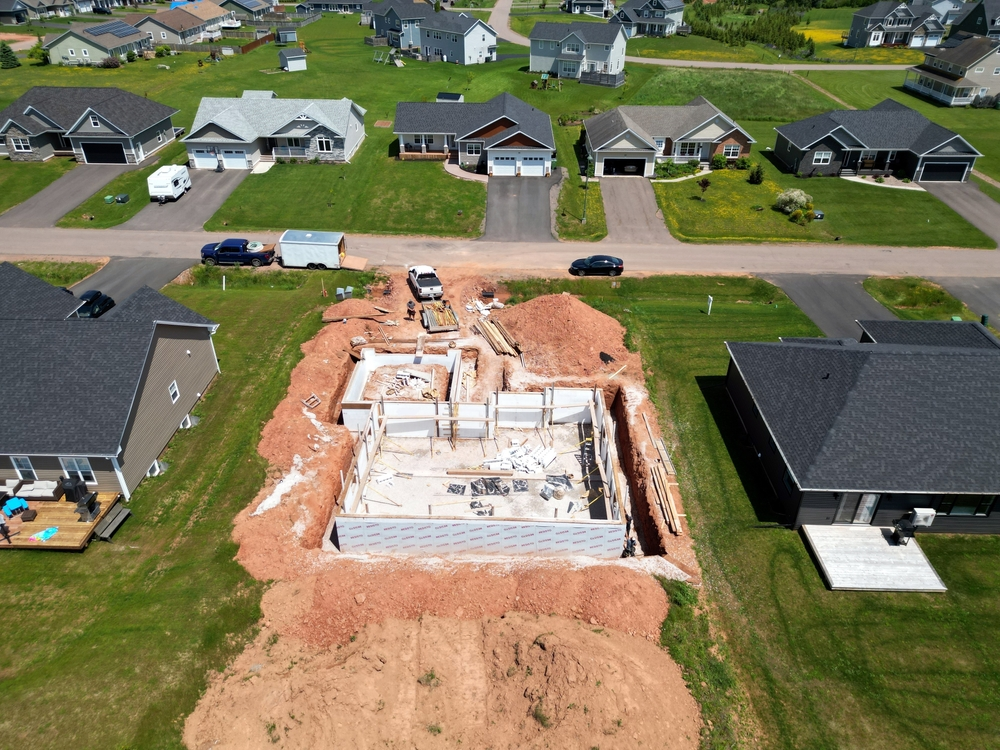

A homeowner finishes a garage addition. Six months later, a utility crew arrives with a notice: a sewer line runs under the slab, and they need access. The title report showed nothing. This is the nightmare behind the question of what happens when a residential property is built over an unrecorded utility easement. The answer depends on how the easement arose, whether the line was visible, and what your state’s recording laws say. Some owners keep their structures. Others pay to move them, or lose part of the building. This guide explains how an unrecorded utility easement can still be valid, who usually prevails in common situations, what the utility can do, and the practical steps to take if you find one. You’ll leave knowing which questions to ask, and when to bring in a real estate attorney.
What is an unrecorded utility easement?
An unrecorded utility easement is a legal right for a utility to use part of your land that does not appear in the county land records. It can still be enforceable if it arose through long use, implication, or a subdivision plat or statute, depending on state law.
How can an easement exist without a recording?
| Source | How it arises | Common issue |
|---|---|---|
| Prescriptive easement | Open, continuous use for the statutory period, often 5 to 20 years by state | Proving the period and visibility |
| Implied easement | Land was split and the line served the other parcel | Courts look at necessity and prior use |
| Plat dedication or statute | Subdivision map or state law reserves utility strips | Plat notes may exist even if the deed is silent |
| Written easement, lost or unindexed | A recorded document filed in the wrong place | A deeper title search may find it |
Who usually wins?
| Scenario | Likely outcome |
|---|---|
| Line was buried, no markers, no plat notice, you bought without knowledge | Many states protect good-faith buyers, but results vary and prescriptive claims can survive |
| Visible evidence existed (pedestals, manholes, meters) | Courts may say you were on inquiry notice, so the easement can bind you |
| Utility has a statutory or franchise right | The utility often keeps access, regardless of recording |
| Builder never pulled a locate or permit | Cost of removal often shifts to the owner or builder |
What can the utility do?
Typically, a utility may enter to inspect, repair, or replace its line. It is not usually required to pay for your structure sitting on top. If the structure blocks access, the utility can demand removal, seek an injunction, or in some cases remove the obstruction itself. Many utilities will first negotiate, so respond early and in writing.
What to do if you find one
- Stop construction if work is still underway.
- Call 811 before any digging. It is the national call-before-you-dig number.
- Request records from the utility: maps, dates of installation, and any easement documents.
- Order a fuller title search and ask your title company about coverage.
- Check your owner’s policy. Standard policies often exclude unrecorded matters that a survey would reveal, so read the exceptions.
- Consult a real estate attorney about relocation, a recorded encroachment agreement, or a claim against the builder or surveyor.
How to avoid this before you buy
| Step | Why it matters |
|---|---|
| Get an ALTA/NSPS land title survey | Shows visible utilities and encroachments |
| Walk the lot for manholes, pedestals, and cleanouts | Visible clues can matter legally |
| Review the plat map | Utility strips are often noted there |
| Ask the utility for as-built drawings | Finds lines the title search may miss |
| Pull permits for any planned addition | Catches conflicts before building |
FAQ
Can I keep my house if it sits over an unrecorded easement?
Often yes, but not guaranteed. It depends on the easement’s source, your state’s law, and whether the utility needs access.
Does title insurance cover this?
Sometimes. Many policies list exceptions for matters a survey would reveal, so check yours and ask the insurer before assuming coverage.
Who pays to move a structure?
Usually the owner, unless you can recover from the builder, surveyor, or seller.
for more information visit https://activepropertycare.us/