

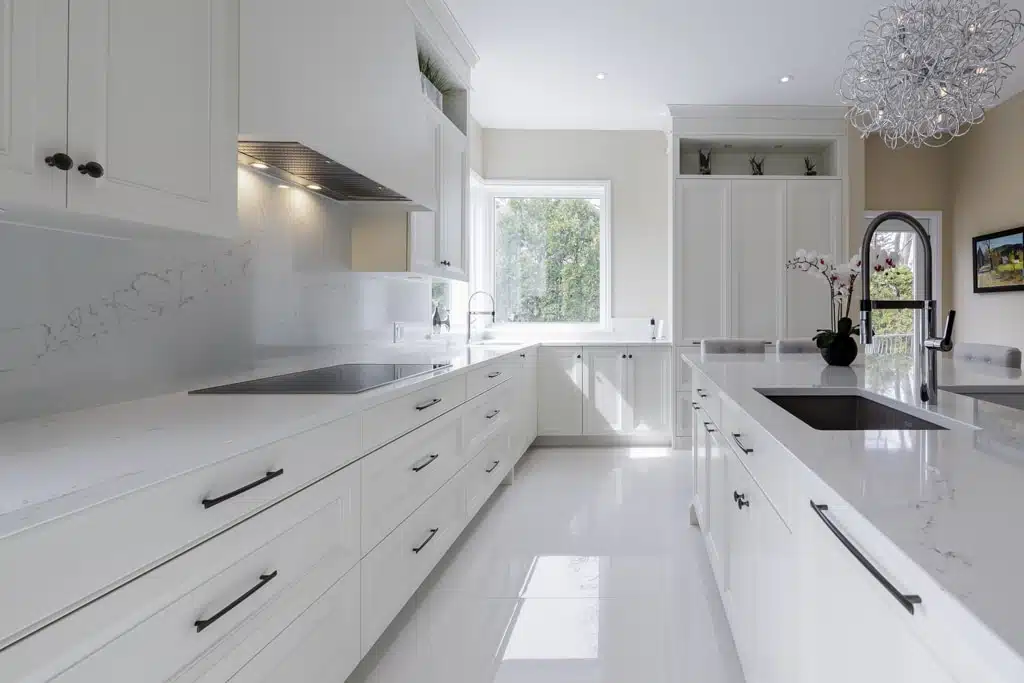
Choosing the right countertop material is an important decision in modern kitchen design, and two materials that have been increasing in popularity are quartz and porcelain. Both offer durability, style, and low-maintenance benefits, but they differ in composition, performance, and aesthetics. Understanding the differences between quartz countertops and porcelain countertops can help homeowners make the best choice for their kitchen.
Quartz Countertops: Engineered Durability
Quartz countertops are engineered from natural quartz crystals combined with resin and pigments. The result is a non-porous surface that resists stains, scratches, and bacteria, making it an ideal choice for busy kitchens. Quartz is available in a wide variety of colors and patterns, including options that look like natural stone such as granite or marble.
One of the key advantages of quartz is its low maintenance. Unlike natural stone, quartz does not have to be sealed, and daily cleaning can be accomplished using a mild soap and water. Designers often recommend quartz for modern kitchens because its uniform appearance and numerous design options allow for a sleek, cohesive appearance that fits contemporary aesthetics.
Porcelain Countertops: Heat and Scratch Resistance
Porcelain countertops are made from ceramic clay mixed with other materials that are then baked at extremely high temperatures to create a dense and durable surface. Porcelain is naturally non-porous, making it very resistant to stains and bacteria as well as easy to clean. It also offers exceptional heat resistance, so hot pans can be placed directly on the countertop without fear of damage.
Porcelain is often favored in ultra modern kitchens due to its ability to mimic natural stone or concrete while maintaining a consistent and minimalistic appearance. It can also be fabricated in large slabs, reducing the amount of visible seams and enhancing the clean lines that contemporary design is known for.
Key Differences to Consider
When deciding between quartz or porcelain for a modern kitchen, homeowners consider several factors:
- Durability: Both materials are highly durable, but each have their own limitations. Porcelain is more resistant to heat and UV light, making it better for kitchens with lots of natural sunlight, but it is typically available in thinner slabs, which are more prone to chipping at edges and corners. Quartz is extremely hard but can be damaged by extreme heat due to its resin content.
- Maintenance: Both countertops are low-maintenance, with non-porous surfaces that are stain and scratch resistant, don’t require sealing, and are easily cleaned with soap and water. Quartz countertops may require more careful handling, though, in order to avoid heat damage.
- Appearance: Quartz offers more variety in color, patterns, and finishes, while porcelain delivers a seamless, minimalist look with large slabs.
- Cost and Installation: Quartz and porcelain are similarly priced, with quartz ranging from $45 to $200 per square foot and porcelain costing $55 to $120 per square foot. Quartz is heavy and needs proper structural support, which should be accounted for during installation. Porcelain slabs tend to be thinner and lighter, making them easier to install, but they may require professional handling to prevent cracking.
Making the Right Choice for Your Kitchen
Both quartz and porcelain countertops provide excellent durability, style, and long-term value but have a few differences that often sway homeowners one way or another. Evaluating your kitchen’s daily use, design goals, and lifestyle can help determine which countertop material is right for you.
for more information about countertops visit https://activepropertycare.us/