
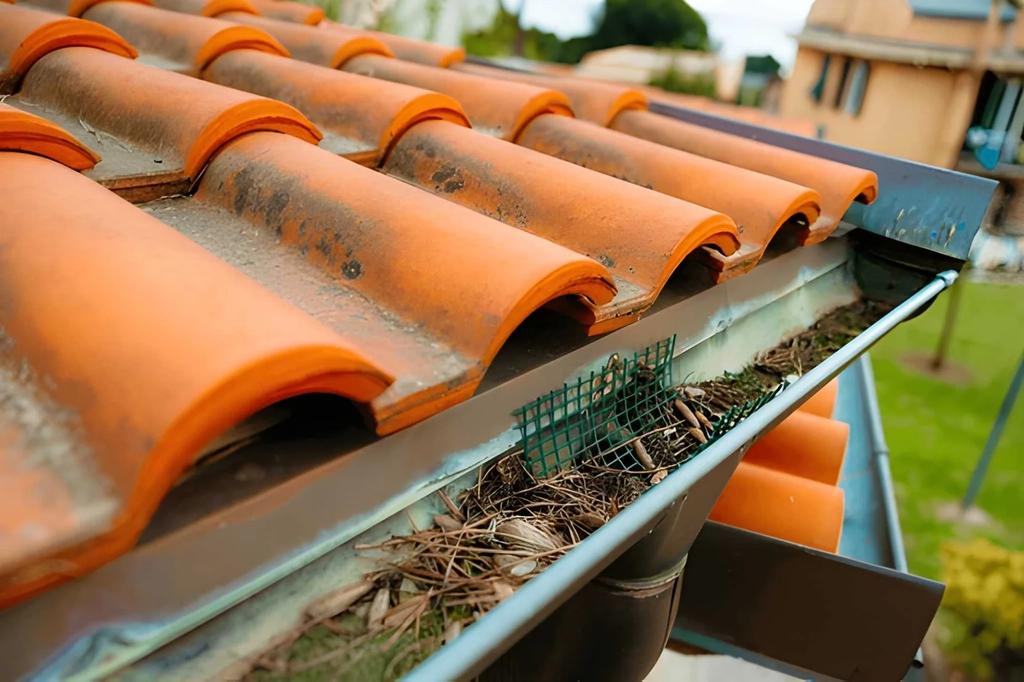

A tree limb comes down, hail rattles the windows for ten minutes, or a ceiling stain appears the morning after a storm. Within hours, three things compete for your attention: the leak, the insurance company, and the stranger knocking on your door with a “free inspection.” If you are asking whether you should repair or replace a damaged roof, the smartest first step is not choosing a repair method. It is protecting the house and documenting everything before anyone touches it.
I treat a damaged roof as two separate problems. The first is physical: what is broken and how long will the rest last? The second is financial: who pays, and how much? Many homeowners solve the first problem and then lose money on the second.
This is general information, not an inspection or insurance advice. Your policy and a licensed roofer have the final say.
This guide covers a quick answer, a first-72-hours plan, a damage-type table, how insurance values an older roof, red flags, mistakes to avoid, and a short FAQ.
Should you repair or replace a damaged roof?
Repair a damaged roof when the damage is isolated, the deck is sound, and the roof has most of its life left. Replace it when damage is widespread, the roof is near the end of its life, or repairs would cost close to a new roof. Document first, protect the home with a temporary cover, then get a licensed roofer’s written assessment.
What should you do in the first 72 hours?
| Order | Action | Why |
|---|---|---|
| 1 | Stay off the roof | Never climb onto a storm-damaged roof |
| 2 | Take date-stamped photos and video | Document the damage before any temporary work begins |
| 3 | Stop active leaks | Tarp holes, board broken skylights, and catch leaks in buckets |
| 4 | Keep receipts | Save receipts for tarps, water extraction, and temporary lodging |
| 5 | Call your insurer | Report the claim, and ask about coverage and deductible |
| 6 | Get a roofer’s written assessment | Gives you a second opinion storm |
A tarp is a stopgap, not a repair. Ask whoever installs it for a written note listing what was covered and when.
Which damage points to repair or replace?
| Damage | Usually points to |
|---|---|
| A few missing or lifted shingles | Repair |
| One damaged flashing or vent | Repair |
| Damage on one roof slope from a fallen branch | Repair or partial replacement |
| Hail bruising across several slopes | Replace |
| Soft, sagging deck | Replace, plus a structural check |
| Old roof with fresh storm damage | Often replace, but check insurance terms |
| Repairs failed twice | Replace |
For age and cost thresholds, see our guide on roof repair versus replacement. Rules of thumb range from 25% to 50% of new-roof cost depending on the roofer.
How does insurance value an older roof?
| Policy type | What it pays |
|---|---|
| Replacement Cost Value (RCV) | The cost to replace your roof today, minus your deductible |
| Actual Cash Value (ACV) | That same amount minus depreciation for age and wear |
| RCV payment timing | Often two checks: an initial ACV payment, then a depreciation recovery check after the work is invoiced |
If a roof’s estimated lifespan is 30 years and it is 15 years old, its actual cash value may be 50% of replacement value, and your deductible still applies. Compare the likely payout with your deductible before filing, and read your exclusions. ufcu
What are the red flags?
| Red flag | Why |
|---|---|
| Door-knocking contractors right after a storm | Legitimate contractors do not cold-knock after severe weather |
| Pressure to sign on the spot | You lose time to compare |
| Large cash deposit upfront | Risk of loss |
| Offers to waive your deductible | Deductible waiving is insurance fraud in most states |
| Claim that the roof is a “total loss” with no photos | Ask for several photos and an explanation |
What mistakes should you avoid?
- Removing evidence early. Photograph before cleanup or tarping.
- Filing without comparing. A small repair may cost less than your deductible.
- Signing quickly. Get two written estimates, and check licenses and insurance.
Frequently asked questions
Should you tarp a damaged roof yourself?
Only if it is safe. Otherwise hire a qualified person, since falls are a real danger.
Will insurance replace the whole roof?
It depends on policy terms, damage, and roof age. When only part of a roof is damaged, the carrier assesses whether to repair those sections or replace the whole roof. gaf
How long do you have to file?
Deadlines vary. Check your policy and call promptly.
Bottom line
Document first, protect the home second, and decide on repair or replacement third. Match the fix to the damage, compare quotes, and read your policy before filing. Avoid pressure from strangers.
for more information visit https://activepropertycare.us/how-to-guides-activepropertycare/