
You notice a gray-black line along the caulk, a few dark spots on the ceiling, or a pinkish film in the corner of the shower. It is unpleasant, and it usually comes back. If you are wondering how to remove mold from bathroom surfaces using DIY methods, the good news is that small patches on hard surfaces are often manageable at home. The better news is that the most effective step is not a cleaner at all. It is moisture control.
I have cleaned plenty of bathroom mold and seen the same pattern: scrub the spots, skip the ventilation, and the mold returns within weeks. Lasting results come from removing the growth and fixing the damp.
This guide is general information, not medical advice. It covers a quick answer, a comparison of DIY cleaners, a step-by-step method, safety data, when to call a professional, mistakes to avoid, and a short FAQ. If anyone in your home has asthma, allergies, or a weakened immune system, ask a clinician before cleaning mold yourself.
How can you remove mold from bathroom surfaces using DIY methods?
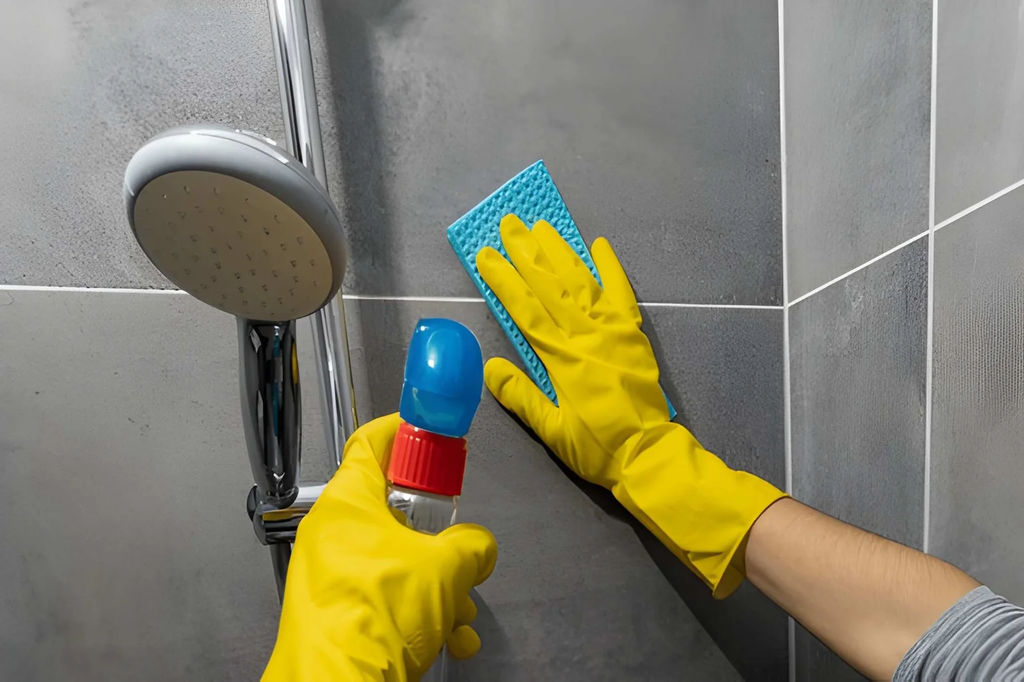
To remove mold from bathroom surfaces, wear gloves and a mask, scrub the area with detergent and water, rinse, and dry it completely. For stubborn spots on hard, nonporous surfaces, use a diluted bleach solution or another cleaner with good ventilation. Never mix cleaners. Then fix the moisture source so the mold does not return.
Which DIY cleaners work best?
| Cleaner | Best on | Notes |
|---|---|---|
| Detergent and water | Tile, glass, tubs, sealed surfaces | Scrub mold off hard, non-porous surfaces with detergent and water and let dry completely |
| Diluted bleach | Tile, glazed surfaces | Use no more than 1 cup of household bleach per gallon of water, with good ventilation |
| White vinegar | Light mold on hard surfaces | Common home method, but weaker evidence than detergent |
| Baking soda paste | Grout scrubbing | Adds mild abrasion |
| Hydrogen peroxide (3%) | Light stains on hard surfaces | Test a small spot first, since it can lighten materials |
| Commercial mold remover | Heavier growth | Follow the label |
Routine use of bleach or other mold-killing chemicals is not recommended. Physical scrubbing matters most.
What are the steps?
| Step | Action |
|---|---|
| 1 | Open the window or run the fan, and wear gloves, eye protection, and a mask |
| 2 | Test a hidden spot to check the surface can handle the cleaner |
| 3 | Scrub with detergent and water using a stiff brush or sponge |
| 4 | Rinse and wipe away residue |
| 5 | Apply your chosen cleaner if needed, and follow the label |
| 6 | Dry the area fully with a towel or fan |
| 7 | Find and fix the moisture source |
Do not scrub dry, dusty mold hard, since that can spread spores. Dampen it lightly first. Throw away sponges and cloths afterward.
What does the safety data say?
| Fact | Guidance |
|---|---|
| Dry-out window | Mold will usually not grow if damp areas are dried within 24 to 48 hours |
| Small-area limit | The EPA says areas of 10 square feet or less can be handled with detergent and water |
| Large areas | The EPA recommends a qualified professional for areas over 10 square feet |
| Mixing cleaners | Never mix bleach and ammonia, since this can release toxic fumes |
| Dead mold | Dead mold can still cause allergic reactions, so remove it physically |
Also avoid mixing bleach with vinegar. Use one product at a time, and rinse in between.
When should you call a professional?
| Situation | Why |
|---|---|
| Mold covers more than 10 sq ft | Larger areas need proper containment |
| Mold on drywall, ceiling tiles, or wood | Porous materials may need replacement |
| Mold returns after cleaning | A hidden leak may be feeding it |
| Musty smell with no visible source | Mold may be inside walls |
| Someone has respiratory problems | Exposure can worsen symptoms |
How do you stop it coming back?
Run the exhaust fan during showers and for about 20 minutes after, or open a window. Wipe wet walls and the tub, hang towels to dry, and fix leaks. Replace cracked caulk, since mold hides behind it. Porous items that have been wet for more than 48 hours and cannot be cleaned and dried should be removed.
What mistakes should you avoid?
- Painting over mold. Clean and dry first.
- Using bleach on porous surfaces. It sits on top and does not remove deep growth.
- Skipping ventilation. Cleaning without fixing moisture only buys time.
Frequently asked questions
Does vinegar kill bathroom mold?
It can help on light mold on hard surfaces, but detergent and scrubbing remain the most reliable DIY step.
Is bathroom mold dangerous?
It can cause allergy and breathing symptoms in some people. Speak to a doctor if you feel unwell.
How long does it take mold to grow?
Mold can develop within one to two days of dampness, so quick drying matters.
Bottom line
Scrub small patches with detergent and water, dry the area, and fix the moisture. Use bleach sparingly and never mix cleaners. Call a professional for large areas, porous materials, or repeat growth.
for more information visit https://activepropertycare.us/how-to-guides-activepropertycare/