

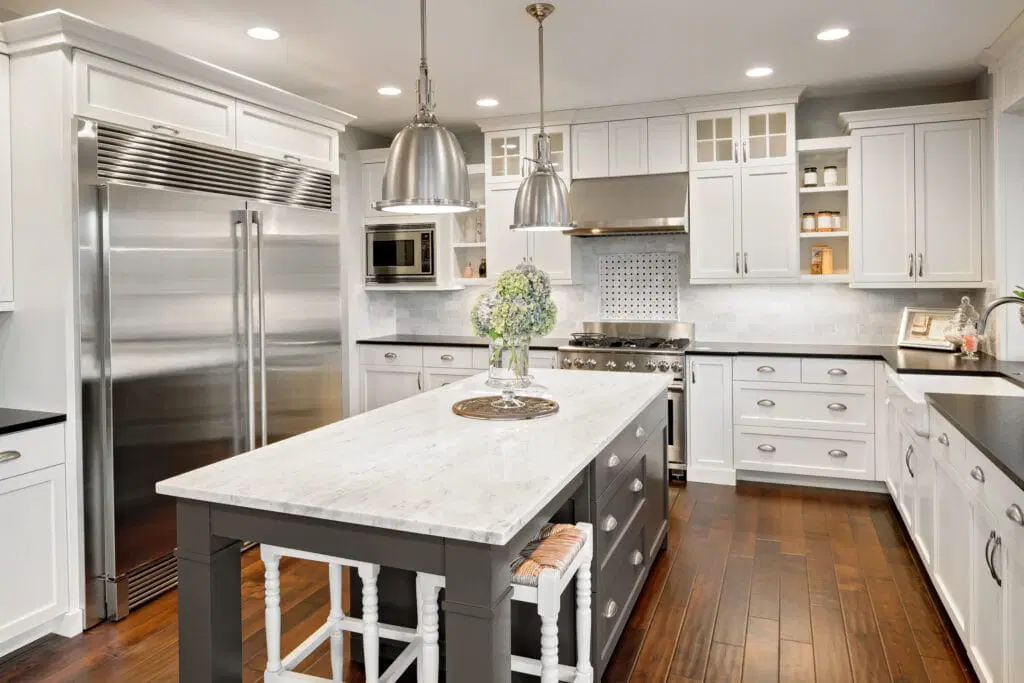
A kitchen renovation is one of the most frequently discussed home improvements, and also one of the most frequently delayed ones. The disruption feels daunting. The decisions feel overwhelming. The cost feels significant. All of that is true to varying degrees, and yet homeowners who finally complete a kitchen reno almost universally say the same thing afterward: they wish they’d done it sooner. The gap between how a kitchen renovation sounds in theory and how it actually feels to live with the result is something worth exploring before the decision gets pushed back another year.
Before any renovation begins, choosing who does the work shapes everything that follows. Working with local kitchen renovation contractors who understand the specific character of Toronto homes, from older semi-detached properties with tight galley kitchens to newer condos with challenging layout constraints, makes a meaningful difference in what’s achievable and how smoothly the project runs. The right contractor isn’t just a builder; they’re a collaborator who translates what you want into what’s actually possible.
The Layout Is Where Everything Starts
Most kitchen frustrations aren’t about aesthetics. They’re about flow. A kitchen that forces you to cross your own path repeatedly while cooking, that puts the refrigerator and the prep counter on opposite sides of the room, or that offers no logical place to stage a meal while it comes together is exhausting to work in every single day. You adapt to it, because that’s what people do, but you’re also aware of the friction every time.
A thoughtful kitchen renovation starts by questioning the layout before touching anything else. Sometimes a small adjustment, relocating the island, reconfiguring where the sink sits in relation to the range, or simply opening up a wall that was blocking visual connection to an adjacent space, creates a dramatically different experience. The square footage of the room doesn’t need to change for the kitchen to feel twice as functional. That shift in daily usability is something homeowners describe as transformational in a way they didn’t anticipate.
Storage That Fits How You Actually Cook
Standard kitchen cabinetry from a decade or two ago wasn’t designed around how most households actually use a kitchen today. Deep corner cabinets that require you to remove twelve items to reach the one you want, base cabinets without drawer inserts where everything gets stacked in piles, and upper cabinets that require a step stool to access anything above the second shelf are friction points that seem minor individually but accumulate into significant daily frustration.
Contemporary kitchen design has made enormous strides in storage intelligence. Pull-out organizers, drawer-within-drawer configurations, built-in dividers for specific items, and appliance garages that keep countertops clear while keeping frequently used items accessible are all now standard options rather than premium upgrades. A kitchen renovation is the opportunity to design storage around how your household actually functions rather than adapting your habits to the limitations of a box of cabinets chosen by someone else years ago.
Lighting Changes Everything About a Kitchen
This is consistently one of the most underestimated elements of a kitchen renovation and one of the most impactful. Kitchens that rely entirely on a single overhead fixture in the centre of the ceiling are poorly lit for actual cooking tasks. Shadows fall exactly where you need to see clearly: on the cutting board, over the range, inside cabinets. Eye strain during food preparation is a real phenomenon that people rarely connect to their kitchen’s lighting design because they’ve simply normalized it.
A well-planned kitchen renovation addresses lighting in layers. Task lighting under upper cabinets illuminates prep surfaces directly. Pendant lighting over an island serves both function and atmosphere. Recessed lighting distributed across the ceiling eliminates the centre-of-room shadow problem. The change in how a kitchen feels at different times of day, when morning light comes through a better-positioned window or when evening cooking happens under proper task lighting, is one of those renovation outcomes that people genuinely didn’t know they were missing until they had it.
The Social Dimension of a Kitchen That Invites People In
Kitchens are increasingly the social centre of a home. Gatherings happen in kitchens. Homework gets done at kitchen islands. Conversations that matter happen while someone is cooking and someone else is nearby. A kitchen that’s closed off, cramped, or simply uninviting to spend time in shapes the social patterns of a household in ways that are easy to overlook.
Opening a kitchen to adjacent living or dining space, adding seating at an island or peninsula, or simply creating a kitchen that’s pleasant to be in rather than purely functional changes how a household uses the room. Guests who used to stand awkwardly in a doorway find themselves naturally drawn in. Kids who did homework at the dining table start doing it at the island. Those seemingly small behavioral shifts reflect a genuine improvement in the quality of daily life at home.
The Financial Case Is Stronger Than It Looks
Kitchen renovations are consistently cited as among the highest-return home improvements for resale value. Beyond the resale calculation, though, there’s a case to be made on the basis of daily use. A kitchen is used multiple times every single day by every person in the household. The return on a well-executed kitchen renovation, measured in quality of daily experience over the years of use before a sale ever enters the picture, is genuinely difficult to match with any other home improvement.
The disruption of a kitchen renovation is real, typically two to eight weeks depending on scope, and planning for it matters. A temporary kitchen setup with a countertop appliance, a mini fridge, and an electric kettle makes the weeks without a proper kitchen significantly more manageable. But the disruption ends. The result stays. That asymmetry is worth remembering when the decision feels difficult.
