

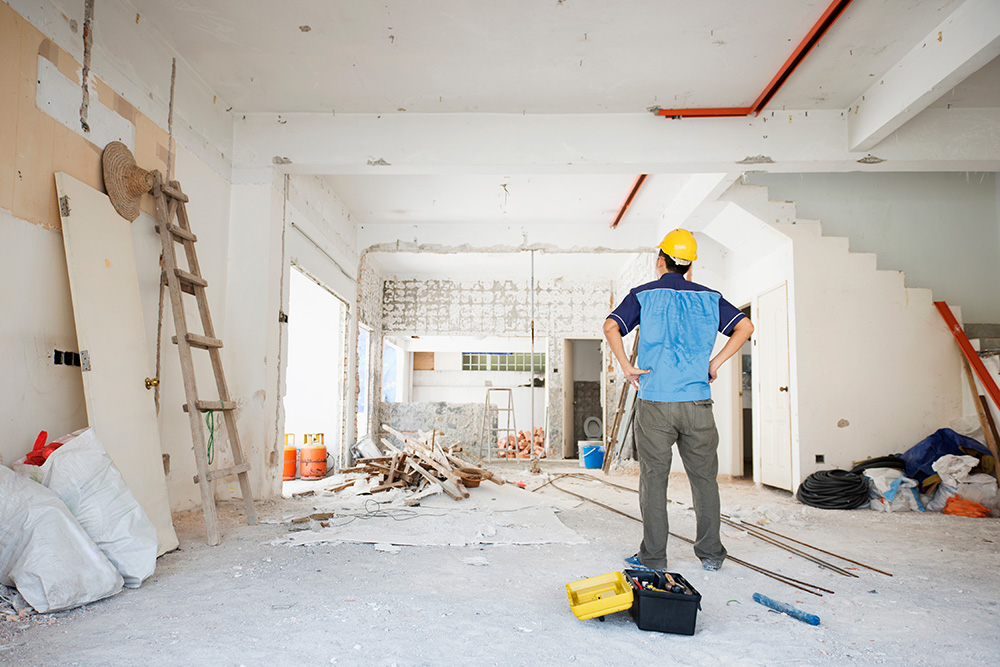
One of the most common points of confusion for homeowners who are ready to renovate is whether to tackle the project in phases or commit to a comprehensive whole-home transformation from the outset. Both approaches have genuine merit, and the right answer isn’t the same for every household. But it is a decision with long-term financial and practical implications, and it deserves more consideration than most homeowners give it before they get started.
Understanding the full scope of what each approach actually involves, and what each one costs when all factors are accounted for, is the starting point. Working with a team that offers full home renovation services means that conversation can happen with someone who has seen both models play out across many projects and can give you an honest assessment of which path makes more sense given your home’s specific needs and your household’s circumstances.
The Case for a Whole-Home Approach
When a home needs significant updating across multiple rooms, a whole-home renovation completed in a single project phase is almost always more cost-effective per dollar of improvement than the same work done incrementally over several years. The efficiency gains come from logistics: trades make one mobilization, not several. Materials can be ordered and managed collectively rather than in small separate batches. The site setup, protection, and cleanup happens once. Waste disposal is consolidated.
Beyond cost, a whole-home renovation produces a visually and functionally coherent result. When rooms are renovated independently over years, the design decisions made for each one are made in isolation, and the home ends up with a patchwork quality that even homeowners who don’t think of themselves as design-conscious can feel. A kitchen renovated in one style adjacent to a hallway with different flooring and trim from a different era never quite reads as a unified home. When everything is considered together, those transitions can be planned thoughtfully from the start.
When Phasing Makes Sense
A phased approach is genuinely the right choice in certain circumstances. If a household has a firm budget ceiling that can only accommodate one room at a time, forcing a whole-home project that overextends finances creates stress and can lead to quality compromises. It’s better to renovate one room well than to renovate five rooms with insufficient budget and attention for each.
Phasing also makes sense when the household has changing needs on the horizon. A family that’s anticipating significant lifestyle changes, an addition to the family, children leaving home, or a shift in how spaces are used, may find that waiting to renovate certain rooms gives them better information about what those rooms need to become. Renovating a space for how you live today, only to need something different in three years, is a form of waste that a more patient approach can avoid.
The critical point when choosing a phased approach is to plan with the whole home in mind from the beginning. That means establishing design standards, material palettes, and structural decisions early that will hold coherently across all phases, rather than starting fresh with each room and hoping it comes together. A phased renovation that begins with a clear master plan is fundamentally different from an improvised one.
The Hidden Costs of Phasing That Most Homeowners Miss
The financial logic of phasing seems straightforward: spread the cost over time by spreading the work over time. In practice, phasing often costs more in total than a single comprehensive project, for several reasons that aren’t immediately visible when the decision is made.
Every mobilization of trades costs money. Every waste disposal run costs money. Every protection setup for adjacent finished areas during a subsequent phase adds time and cost that wouldn’t exist if the work were done together. Discovering in phase three that the flooring chosen in phase one is no longer available, or that the tile that looked perfect in the first bathroom doesn’t read correctly in the second one, adds either replacement costs or a coherence compromise to the project. Statistics Canada data on residential renovation spending reflects that phased projects consistently exceed their original total budget projections more frequently than single-phase projects of equivalent scope.
Structural and Systems Considerations That Favour the Single Phase
Homes that need plumbing updates, electrical panel upgrades, or HVAC improvements benefit most from addressing those systems during a single renovation phase. A kitchen renovation that involves partial re-piping, followed three years later by a bathroom renovation that requires additional plumbing work, involves touching the same systems twice. Each time those systems are opened up, there are labour costs, inspection requirements, and potential exposure of adjacent materials that could have been avoided if both renovations had been coordinated.
Similarly, if a home’s flooring is going to be replaced throughout, doing it in stages means either living with different floor finishes in adjacent rooms for years, or adding the complexity of transition strips and edge treatments that wouldn’t be needed if the floor were addressed as a continuous surface. These are the kinds of practical inconveniences that homeowners don’t fully anticipate when they’re planning a phased approach on paper.
Making the Decision With the Right Information
The most useful starting point for this decision is a thorough home assessment by a renovation professional who looks at the full picture rather than just the rooms you’ve identified as needing work. A professional eye will often catch structural issues, outdated systems, or opportunities that weren’t on the homeowner’s radar, and that information changes the calculation significantly. Knowing what the home actually needs, rather than just what’s obviously visible, is the foundation of a renovation decision you won’t second-guess later.