

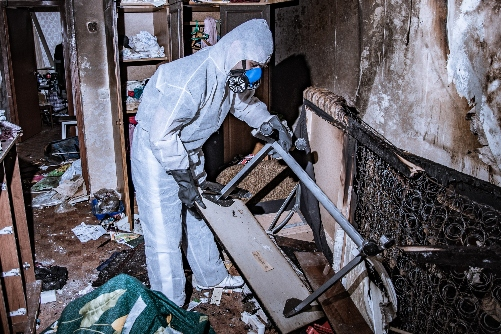
A fire in your home or property is one of the most disorienting things that can happen to a family or a property owner. Even a relatively contained fire, one that was caught early and extinguished quickly, leaves behind damage that extends well beyond the charred area. Smoke travels. Soot settles on every surface. The water used to fight the fire creates its own damage layer on top of the fire and smoke damage. And the chemical compounds produced by modern building materials and furnishings during combustion leave residues that are genuinely hazardous and require specific removal processes.
What happens next, in the days and weeks after a fire, is a restoration process that most homeowners have never had to navigate before. Understanding what that process involves, what happens in what order, and what the realistic timeline looks like takes some of the uncertainty out of a genuinely stressful situation. Here is an honest walk through of what fire and smoke damage restoration actually involves.
For Toronto homeowners and property managers dealing with fire damage of any scale, professional fire and smoke damage restoration Toronto from a certified team that handles the full scope from emergency stabilization through final rebuild means you have one trusted partner managing the entire process rather than trying to coordinate multiple trades through a crisis while also managing an insurance claim.
The First 24 Hours: Stabilization and Safety
Before any cleaning or restoration work begins, the property needs to be stabilized and confirmed safe to enter. This means a structural assessment of any areas affected by fire, because heat and fire damage to framing, joists, and load-bearing elements can compromise structural integrity in ways that are not visually obvious. Any area with structural questions needs engineering assessment before workers or homeowners enter.
Board-up and tarping of openings created by the fire, broken windows, and compromised roof areas is the immediate protective measure that prevents further weather damage and secures the property from unauthorized entry. This happens in the first hours after the fire is out, often while the fire department is still on site completing their investigation. The faster this stabilization happens, the less secondary damage from weather exposure or vandalism accumulates.
Smoke and Soot: The Invisible Damage That Extends Everywhere
The smoke damage in a fire typically covers a much larger area than the direct fire damage. Smoke follows air currents through the building, depositing soot on surfaces in rooms that may not have experienced any direct fire damage at all. The smoke from modern furnishings and building materials contains a complex mixture of chemicals and particles that are corrosive to metal surfaces, discoloring to porous materials, and hazardous to air quality.
Soot begins actively damaging materials within hours of a fire. It etches glass, corrodes metal fixtures and electronics, and permanently stains porous surfaces if not removed quickly and correctly. This is one of the reasons that fire restoration professionals emphasize the importance of rapid response: every hour of delay after a fire allows the soot to cause additional damage that proper cleaning could have prevented.
The Content Inventory and Salvage Assessment
One of the most emotionally difficult parts of fire restoration is the assessment of personal belongings and contents. The restoration team inventories damaged items and evaluates what can be cleaned and restored versus what needs to be disposed of and replaced. This inventory is a critical document for the insurance claim, establishing the scope of content loss in a format the insurer can process.
Items that appear destroyed are sometimes salvageable with professional cleaning techniques. Electronics, clothing, furniture, documents, and sentimental items that have experienced smoke damage can sometimes be restored through specialized cleaning, ozone treatment, or other restoration methods. Items with direct fire damage or structural compromise are typically unrestorable. A professional assessment establishes which category each item falls into rather than assuming the worst about everything.
Smoke Odour Removal: The Step That Completes the Cleanup
Smoke odour is one of the most persistent and challenging aspects of fire damage to fully resolve. The odour compounds from combustion penetrate porous building materials including drywall, wood framing, insulation, and concrete, and continue to off-gas from those materials even after visible soot has been cleaned. A property that smells like smoke after a fire is continuing to release those odour compounds from materials that have absorbed them.
Professional smoke odour removal uses a combination of thermal fogging, which uses high-temperature fog to penetrate the same pathways the smoke traveled, ozone treatment, which breaks down odour molecules chemically, and HEPA air filtration to capture airborne particles. Painting over smoke-affected surfaces without treating the underlying odour contamination in the materials behind them results in a property that smells acceptable immediately after painting and begins to smell like smoke again within weeks as the compounds continue to off-gas through the new paint layer.
The Reconstruction Phase: From Cleanup to Livable
After all cleaning, odour treatment, and damaged material removal is complete, the reconstruction phase begins. This is the conventional construction work of replacing what was damaged: new drywall, new insulation, new flooring, new cabinetry, new fixtures. Depending on the scope of the fire, this phase can range from a single room replacement to a near-complete rebuild.
For homeowners who have been temporarily displaced during the restoration process, the reconstruction timeline is often the most anxiously watched part. A clear project schedule with milestones and realistic completion dates gives families the ability to plan their temporary arrangements without living in uncertainty about when they can return home. This communication is a standard expectation of a quality restoration contractor, not an extra service.
The Insurance Claim Running in Parallel
Fire damage claims are among the most complex insurance claims a residential policyholder will ever navigate. The scope of loss includes structural damage, content loss, smoke damage, temporary accommodation costs, and additional living expenses during the repair period. Each category has its own documentation requirements, and insurers have adjusters whose job is to assess the loss and determine the covered amount.
Having a restoration contractor with deep experience in insurance restoration managing the documentation and insurer communication means that the claim is supported with the professional estimates, damage documentation, and restoration scope that insurers require to process claims efficiently. PropertyWorx has managed hundreds of insurance restoration projects and understands how to communicate with insurers in a way that supports a fair and timely settlement rather than an undervalued one.
