

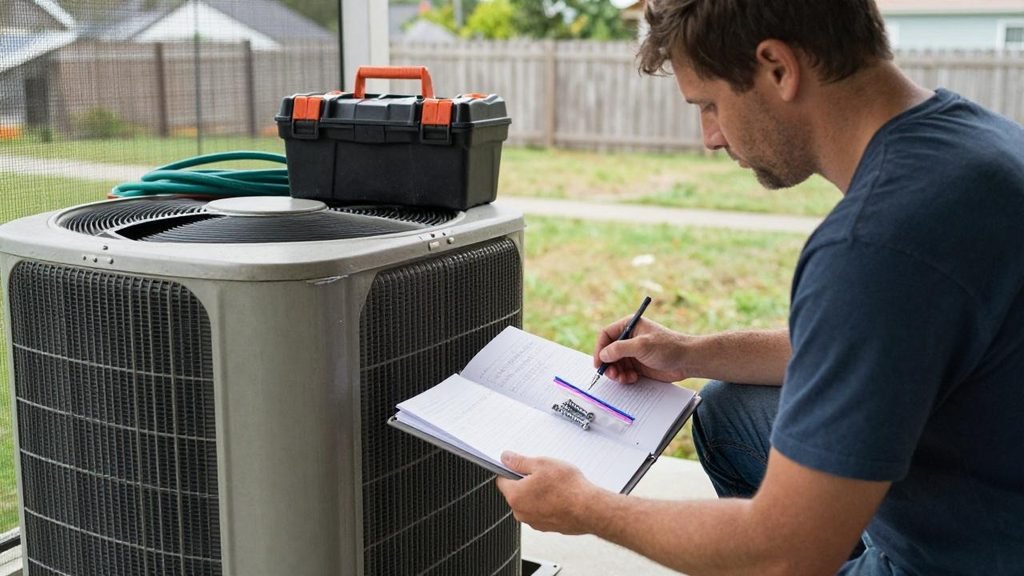
When the air conditioner fails in July, the first questions a technician asks are simple. How old is the unit? When was it last serviced? Is it still under warranty? Most homeowners don’t know. The installation paperwork is in a drawer somewhere, the warranty was never registered, and the last service invoice went to an email address nobody checks.
A home is the largest purchase most people make, and it comes with dozens of systems that need regular care. Keeping a simple record of that care saves money, avoids arguments with contractors and adds real value when it’s time to sell. It doesn’t require special software, only a little consistency.
What a home record should contain
Think of it as a service history, like the one you’d want for a used car. For each major system, keep the basics:
- Heating and cooling: brand, model and serial number, installation date, filter size, service visits
- Water heater: age, capacity, last flush
- Roof: installation date, material, warranty, any repairs
- Appliances: model numbers, purchase dates, manuals
- Plumbing and electrical: major repairs, panel upgrades, shut-off locations
- Exterior: paint colors, gutter cleaning, pest treatments, irrigation settings
Photos are the quickest way to capture this. Take a clear picture of each equipment label, which shows the model and serial numbers, and of every invoice before it disappears.
Give home paperwork its own address
Most home maintenance now runs through email. Appointment confirmations, estimates, invoices, warranty registrations, recall notices and reminders from your HVAC company all arrive there. In a personal inbox they’re buried under everything else, and when you need last spring’s invoice, you can’t find it.
Setting up a free email account just for the house solves this neatly. Use it for contractors, utilities, the homeowners’ association, appliance registrations and insurance. Both adults in the household can have access, everything about the property is in one searchable place, and if you sell, you can forward the important records to the buyer in minutes.
Create a few folders: estimates, invoices, warranties and insurance. That’s all the structure it needs.
Register warranties while you still remember
Many manufacturers extend warranty coverage only if the product is registered within a set period after installation. People forget, and discover years later that a covered part isn’t covered.
When something new is installed, register it the same week. Use the home address so recall notices reach you, and save the confirmation. Keep the installer’s invoice too, since manufacturers often ask for proof of professional installation and regular maintenance before honoring a claim.
Keep a seasonal checklist
A short routine prevents most expensive surprises.
Spring: service the air conditioner, clean gutters, check the roof and exterior for winter damage, test outdoor faucets.
Summer: change air filters monthly during heavy use, check for leaks under sinks, inspect caulking around windows and tubs.
Fall: service the furnace, clean gutters again, drain and store hoses, test smoke and carbon monoxide detectors.
Winter: check for drafts, keep an eye on the attic for signs of leaks, know where the main water shut-off is.
After each task, add a one-line note with the date. It takes seconds and builds a history that’s worth far more later.
Get estimates and agreements in writing
A phone call is fine for an initial conversation. Before any work begins, ask for a written estimate that lists the scope, materials, price and timeline. Email is ideal, because it creates a dated record both sides can refer to.
If the scope changes midway, confirm the change and the new price in writing as well. Most disputes with contractors come from a remembered conversation that each side recalls differently.
Be alert to home repair scams
Homeowners are frequent targets, especially after storms. Warning signs include someone knocking on the door with “leftover materials,” pressure to decide today, a demand for full payment in cash upfront, and reluctance to provide a license number or written contract.
Check licenses and insurance, get more than one estimate for large jobs and never pay the full amount before work is complete. The Federal Trade Commission’s advice on how to avoid a scam is a useful reminder that pressure to act immediately is itself a red flag.
Be careful with email too. Fake invoices and “past due” notices that imitate utilities or contractors are common. If a bill looks unfamiliar, call the company using the number on a previous statement.
Leave a trail for whoever comes next
Keep a one-page summary of the house: where the main water shut-off and electrical panel are, which breaker controls what, the filter sizes and the companies you use. It helps a house sitter, a relative in an emergency or a new owner, and it saves you from explaining it every time.
Store documents where you can reach them
Keep copies of your insurance policy, a home inventory with photos, and your most important records somewhere other than the house itself. A secure cloud folder works well, along with a printed summary in a fireproof box. If there’s a fire, flood or break-in, you’ll need those documents precisely when the originals are out of reach.
The payoff at sale time
Buyers and inspectors respond well to evidence. A folder showing that the furnace was serviced every fall, the roof was replaced in a known year and the water heater has a transferable warranty answers questions before they’re asked. It can speed up a sale and support your asking price.
More immediately, it means that when something breaks on the hottest day of the year, you can tell the technician exactly what they need to know.Read more at https://activepropertycare.us/.