

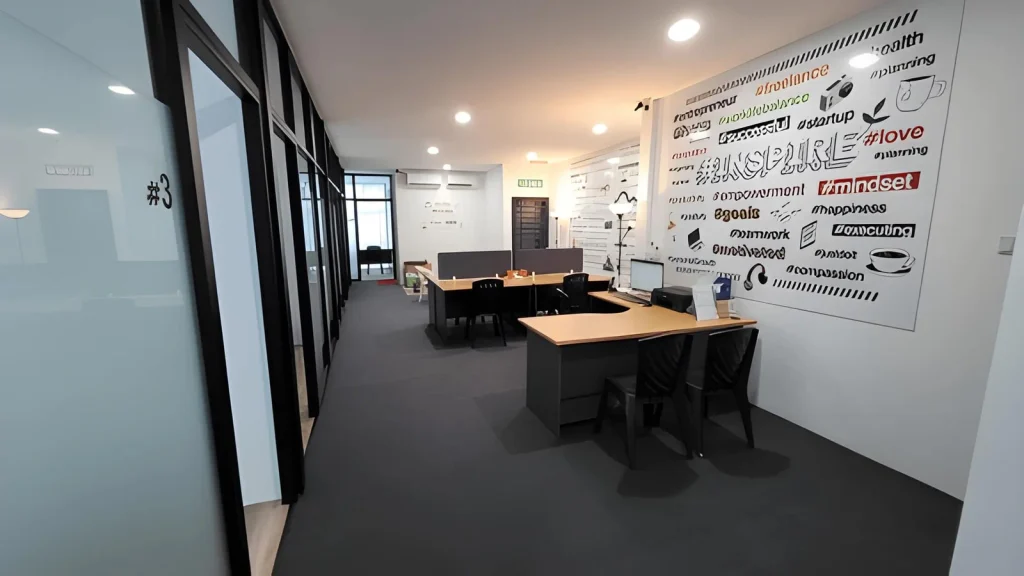
Flexible workspace has become a mainstream choice for businesses in the capital, from solo consultants to regional teams of international firms. Fewer companies want to commit to long leases, heavy fit out costs, and years of fixed overheads before they know how the business will grow. Shared and managed offices offer an alternative, but the two main formats serve quite different needs, and choosing the wrong one can cost money and momentum.
For anyone weighing an Abu Dhabi Coworking Space against a serviced office, the decision comes down to privacy, control, team size, and how predictable your plans are. Both formats provide furnished premises, internet, and shared facilities under one monthly payment, yet they differ in how much space you control and how your brand appears to clients. Understanding those differences helps you match the format to your business rather than to the most appealing brochure.
How Each Format Works
A shared workspace offers desks or small private areas within an open environment, alongside meeting rooms, lounges, and event spaces. Members pay for flexible access, whether a hot desk used occasionally, a dedicated desk, or a small private room. The atmosphere is social and informal, and the community is often as valuable as the furniture.
A serviced office is a private, lockable suite for your team alone. The operator provides furniture, utilities, reception, cleaning, and technology, so you move in ready to work. You typically receive a dedicated address, branded signage options, and a layout that feels like your own premises without the burden of managing them.
Privacy, Branding, and Client Impressions
Privacy is often the deciding factor. Businesses handling confidential client information, legal matters, or sensitive financial data generally prefer the closed doors of a serviced office. Conversations, documents, and screens stay within your own suite, which also makes it easier to meet regulatory expectations around data handling.
Brand presentation matters too. A serviced office lets clients arrive at a space that feels like your company, with your name at reception and a consistent environment for meetings. Shared workspace can still present well, particularly in design led buildings, but you share the setting with other businesses, which suits creative firms and startups more comfortably than formal advisory practices.
Cost and Commitment
Shared workspace usually carries the lowest entry cost and the shortest commitments, sometimes allowing monthly or even daily arrangements. This suits freelancers, founders testing a market, and teams with uncertain headcount. You pay only for what you use, and you can scale up or down without renegotiating a lease.
Serviced offices cost more per person but offer predictability for teams with a stable core. A single fee often covers rent, utilities, maintenance, and support, which simplifies budgeting. Businesses should still ask what is included, since meeting room hours, parking, printing, and additional visitors may attract separate charges.
Licensing and Setup Considerations
Whichever format you choose, check how it fits your licensing needs. Trade licence requirements often depend on having a registered address and a qualifying tenancy arrangement, and not every flexible workspace can support every licence type or jurisdiction. Mainland activities, free zone licences, and Abu Dhabi Global Market registrations each have their own expectations.
Ask the operator whether their premises are approved for your intended activity and whether the tenancy documentation supports your application. Confirming this before paying a deposit avoids the frustration of discovering that a convenient space cannot legally host your business.
Growth and Flexibility
Consider where the business will be in eighteen months. A startup likely to double its team may prefer a shared arrangement that can expand gradually, or an operator offering both formats so you can move into a private suite as you grow. A stable team of eight or ten may find that a serviced office becomes better value than renting several dedicated desks.
Hybrid working patterns also shape the decision. If your team attends the office only a few days each week, flexible desks and bookable meeting rooms can be more economical than a suite sitting empty for much of the week.
Choosing with Confidence
There is no universal winner. Shared workspace rewards businesses that value networking, low commitment, and a lively atmosphere, whilst serviced offices reward those that need privacy, brand control, and a stable base. Visit shortlisted locations at different times of day, assess noise and meeting room availability, and read contract terms on notice periods and renewals. Matching the format to your working style, rather than your budget alone, is what turns flexible space into a genuine advantage for the year ahead.Read more at https://activepropertycare.us/.