
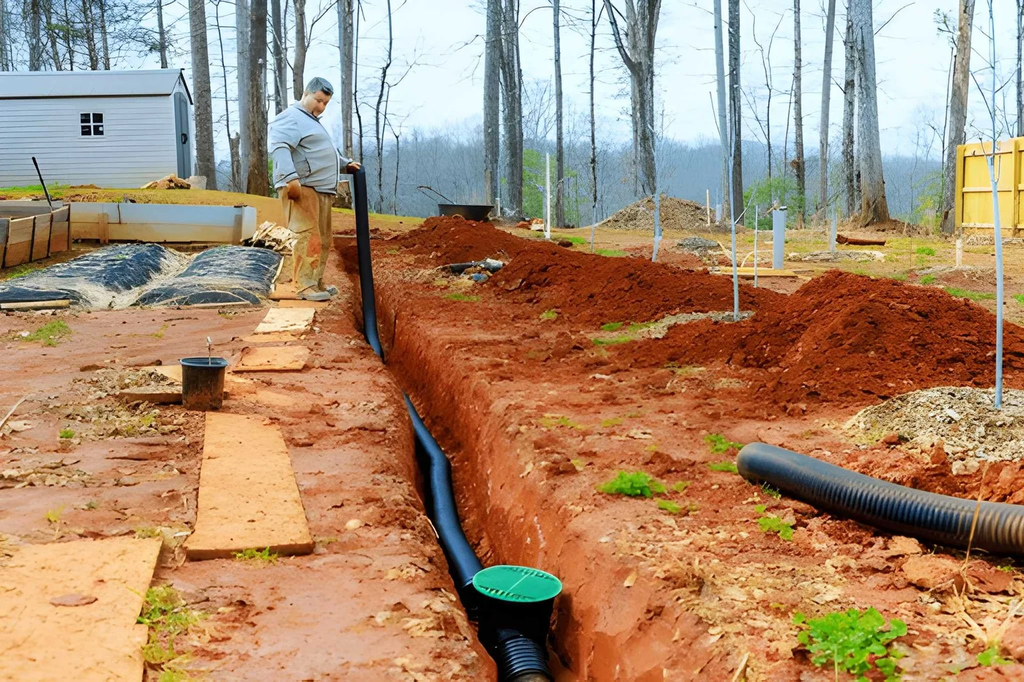

A soggy corner of the yard, a patch of lawn that stays muddy for days, or a basement wall that weeps after every storm. All of them point to the same question: where should the water go? If you are asking which is better for drainage, French drains or dry wells, the useful answer is that they solve different problems. One moves water, and the other stores it. The better choice depends on your soil, your slope, and where you can send the water.
I have seen a dry well installed in dense clay turn into a buried bucket that never emptied, and a French drain with no outlet that just relocated the swamp. Both were good ideas used in the wrong place.
This article is general information, not engineering advice. Local rules, soil, and groundwater conditions matter, so check your municipality and a drainage professional before digging.
It covers a quick answer, a comparison table, soil guidance, cost data, a decision chart, mistakes to avoid, and a short FAQ.
Which is better for drainage: French drains or dry wells?
A French drain is usually better for moving groundwater and surface water away from a problem area, especially in clay soil. A dry well is better for collecting roof or downspout runoff and letting it soak slowly into well-draining soil. Many systems combine both, with a French drain carrying water to a dry well.
How do they differ?
| Factor | French drain | Dry well |
|---|---|---|
| How it works | Moves groundwater away from an area | Collects stormwater and slowly releases it into the water table |
| Shape | A horizontal interceptor that captures subsurface water | A vertical underground reservoir |
| Speed | Faster | Slower, because it disperses water at one location |
| Best soil | Clay | Sandy soil |
| Needs an outlet | Yes | No, but soil must absorb |
| Typical use | Soggy yards, seepage near foundations | Downspout and roof runoff |
What do soil and site rules say?
| Rule | Guidance |
|---|---|
| Dry well and clay | Dry wells fail in dense clay or slow-draining soils |
| Perk test | A percolation test is needed before a dry well kit |
| Distance from house | Place a dry well at least 10 to 12 feet from the foundation |
| Property line | At least three feet from any property line |
| French drain slope | About 1%, or 1 inch of drop for every 8 to 10 feet |
| Clay soil slope | Some guides recommend at least 2% |
| Water table | Infiltration systems are not suitable where the water table is within 1.5 feet of the surface or slopes exceed 10% |
| Maintenance | Flush a French drain with a garden hose every 1 to 2 years |
Slope mistakes cause many DIY failures. An incorrect or inconsistent slope is the most common point of failure. journeymanhq
What do they cost?
| Item | Typical range |
|---|---|
| French drain, exterior, installed | $10 to $50 per linear foot |
| French drain, whole project | Most between $2,000 and $10,000 |
| DIY French drain materials | $10 to $25 per foot |
| Dry well average | $3,126, with most projects $1,344 to $5,167 |
| Percolation test | $670 to $2,200 |
| Dry well permit | $25 to $50 |
Sources differ on which is cheaper, because costs depend on length, depth, and site access.
Which should you choose?
| Your situation | Better fit |
|---|---|
| Wet yard in clay soil | French drain |
| Downspout runoff in sandy soil | Dry well |
| Water seeping at the foundation | French drain, or call a pro |
| No place to send water | Dry well, if the soil allows |
| Long, wet area | French drain |
| Heavy storms, limited space | Combination |
| High water table | Neither, until you get professional advice |
A combined system moves runoff quickly to storage without overloading groundwater.
What mistakes should you avoid?
- Skipping the perk test. A dry well in clay will not drain.
- Wrong slope. Use a line level, and check it often.
- Putting a dry well near the foundation. Water can seep back.
- Ignoring local rules. Some areas regulate stormwater.
Frequently asked questions
Can a French drain empty into a dry well?
Yes. Water can be carried to a dry well, storm drain, or other suitable outlet.
Will a French drain stop basement leaks?
Not always. It redirects surface and roof water, but it may not stop hydrostatic pressure.
How long do French drains last?
With proper care, 30 years or more
Bottom line
Use a French drain to move water, and a dry well to store and soak it, but only where the soil can absorb it. Test your soil, check your slope, keep both away from the foundation, and call a drainage professional for basement leaks or a high water table.
For more information visit https://activepropertycare.us/how-to-guides-activepropertycare/