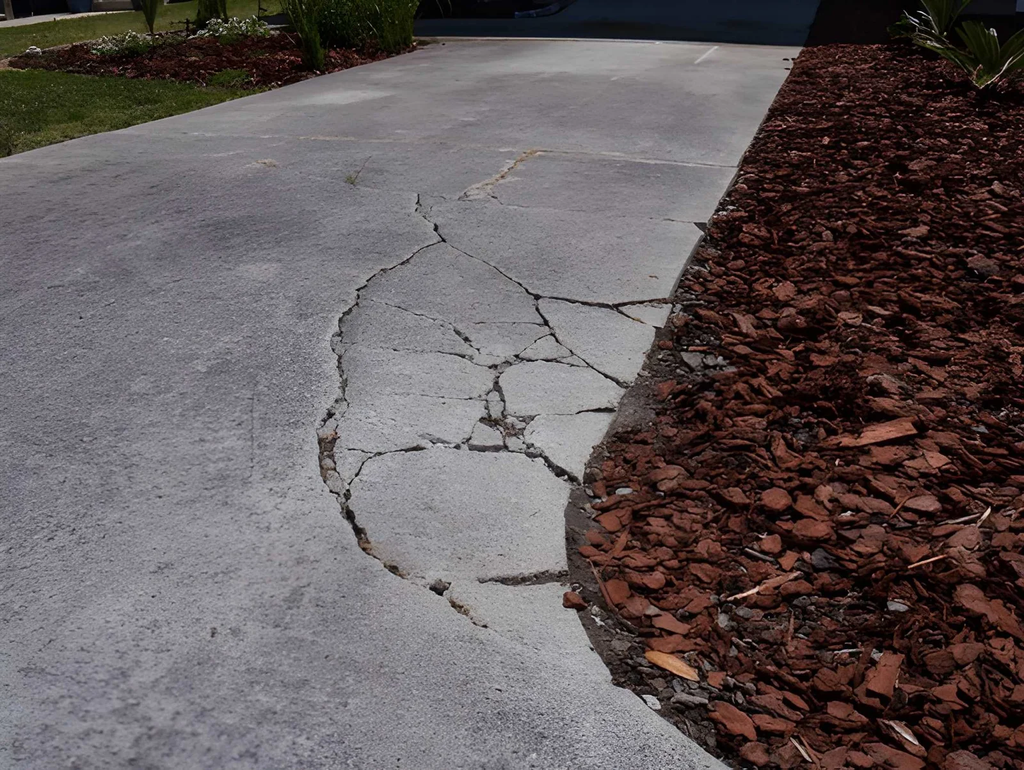

A crack in the driveway looks small until you see weeds growing out of it, then a second crack, then a dip near the garage. Then the real question arrives: do you spend a weekend and a few dollars on filler, or a few thousand on a new surface? If you are asking whether you should seal or replace a cracked driveway, the answer depends less on how many cracks you see and more on what kind they are, how old the driveway is, and whether the base underneath is still solid.
I have seen people replace a ten-year-old driveway because of a few hairline cracks, and others keep patching a failing one for years. Both paid more than they needed to. A short inspection tells you which path makes sense.
Prices and lifespans vary by region and contractor, so treat the figures below as ranges. This article is general information, not a contractor quote or engineering advice.
It covers a quick answer, a crack-type table, lifespan data, a cost comparison, a decision chart, mistakes to avoid, and a short FAQ.
Should you seal or replace a cracked driveway?
Seal a cracked driveway when cracks are narrow, the surface is mostly sound, and the driveway is under about 15 years old. Replace it when you see alligator cracking, large sunken areas, or widespread failure, or when the driveway is near the end of its lifespan. Resurfacing sits in between if the base is still solid.
What do the cracks tell you?
| What you see | Likely meaning | Usual fix |
|---|---|---|
| Small cracks under 1/4 inch | Surface wear | Rubberized crack filler |
| Cracks wider than 1/2 inch | Larger movement | Contractors use hot-pour asphalt |
| Active cracks that keep expanding | Ongoing movement | Crack sealing, not simple filling |
| Alligator or spiderweb cracks | Base layer failure | Repair deeper or replace |
| Potholes | Water got in | Patch, or excavate and rebuild the base |
| Sinking or heaving slabs | Soil or drainage issues | Check drainage, then repair or replace |
How long should a driveway last?
| Type | Typical lifespan | Source note |
|---|---|---|
| Asphalt | 15 to 20 years | Can reach 20 to 30 years with sealing every three to five years |
| Concrete | About 30 years, around 20 in cold climates | Some sources say 40 to 50 years |
Climate, installation quality, and traffic loads change these numbers. If a driveway is under 10 years old and cracking or sagging, repair it to extend its life.
What do the options cost?
| Option | Typical cost range | Notes |
|---|---|---|
| DIY crack filler | Low | Best for small cracks |
| Professional crack repair | $1 to $3 per linear foot | Larger damaged areas cost more |
| Pothole or patch repair | $2 to $5 per square foot, or up to $250 to $500 per patch | Depends on method |
| Resurfacing | About $1 to $4 per square foot | Does not fix underlying issues |
| New asphalt | $5 to $15 per square foot | Sources vary |
| New concrete | $8 to $18 per square foot | Stamped or stained costs more |
Costs differ by region, so get at least two local quotes.
How do you decide?
| Question | If yes | If no |
|---|---|---|
| Is the driveway under 15 years old? | Repair is likely worth it | Consider replacement |
| Are cracks narrow and isolated? | Seal them | Look deeper |
| Is there alligator cracking? | Replace or rebuild | Seal or resurface |
| Is the base firm? | Resurfacing is possible | Replacement is safer |
| Does water pool on it? | Fix drainage first | Seal or repair |
| Will repairs cost close to replacement? | Replace | Repair |
Sealing asphalt too soon or every year can cause the coating to crack and peel. Sealcoating is typically needed every two to three years.
What mistakes should you avoid?
- Sealing over failing pavement. Sealer will not fix a bad base.
- Ignoring water. Drainage problems cause repeat cracking.
- Skipping quotes. Prices vary widely between contractors.
- Overusing sealcoat. More is not better.
Frequently asked questions
Is crack sealing worth it?
For narrow cracks on a sound driveway, yes. It keeps water out and slows damage.
Can you fix a cracked concrete driveway?
Yes. Small cracks can be filled, while sunken slabs may need more work.
How do you know the base has failed?
Alligator cracking, deep potholes, and sagging areas often point to base problems.
Bottom line
Seal narrow cracks early, fix drainage, and resurface if the base is solid. Replace the driveway when cracks form a web, sections sink, or the surface is near the end of its life. Compare quotes first.
for more information visit https://activepropertycare.us/how-to-guides-activepropertycare/