
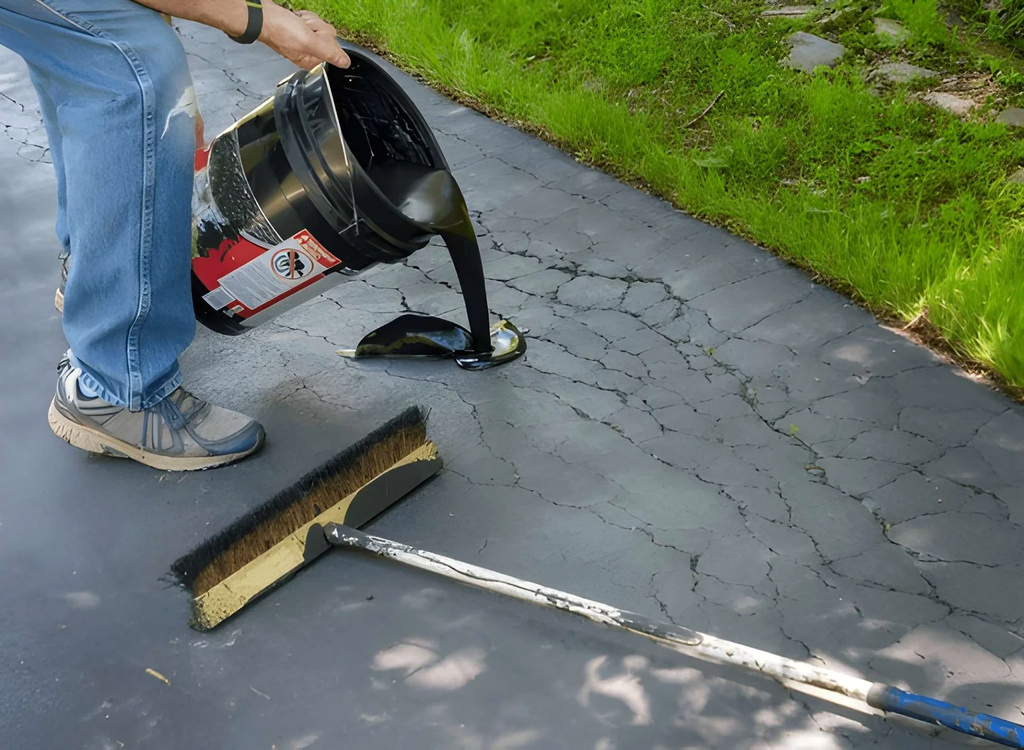

A hairline crack in October looks harmless. By March, water has crept in, frozen, and pried it wider, and a ten-minute fix has turned into a patching job. Most homeowners notice only after the damage spreads.
Most advice stops at “buy a crack filler,” which is how people end up with the wrong tube for the wrong surface. The best products for sealing driveway cracks depend on two things: what your driveway is made of and how wide the crack is. Asphalt needs flexibility. Concrete needs a sealant that tolerates movement. Neither does well with generic caulk.
This guide matches products to crack width and surface, shows when sealing will not work at all, and lays out the steps that help a repair last. You get three tables, a prep list, and short answers to common questions. It assumes a US driveway and a free weekend. Always follow the label on whatever product you buy.
Best Products for Sealing Driveway Cracks by Crack Type
The best products for sealing driveway cracks are rubberized cold-pour filler for narrow asphalt cracks, backer rod plus filler for wide asphalt cracks, and self-leveling polyurethane sealant for concrete. Match the product to crack width and surface, and use patch compound when the edges are crumbling.
| Surface and crack | Product | Why it works |
|---|---|---|
| Asphalt, narrow (up to about 1/4 in) | Cold-pour rubberized filler | Stays flexible, needs no heating |
| Asphalt, medium (about 1/4 to 1/2 in) | Rubberized filler, applied in layers if deep | Layers cure better than one thick pour |
| Asphalt, wide (over 1/2 in) | Backer rod plus filler, or asphalt patch compound | The rod controls depth so filler does not sink |
| Concrete, narrow to medium | Self-leveling polyurethane or elastomeric sealant | Flexes with seasonal movement |
| Concrete, wide or chipped edges | Concrete repair mortar or vinyl patcher | Sealant alone cannot grip broken edges |
Width limits differ by brand, so check the label before you buy.
Check Your Cracks Before You Buy
Spend five minutes with a ruler and a flashlight. Four questions decide most purchases:
- How wide is it? Measure at the widest point.
- How deep? A screwdriver tip tells you quickly.
- Is one side higher? That signals movement, not just a crack.
- Is it a single line or a web? Webs point to a failing base.
| Sign | What it suggests | Next step |
|---|---|---|
| Interconnected cracks like alligator skin | Base failure | Get a paving contractor quote |
| One side sits higher than the other | Settling or heave | Call a contractor; sealant will not fix movement |
| Crack reopens within a season | Active movement or poor prep | Re-clean and use a flexible product, or consult a pro |
| Soft spots or pooling water | Drainage problem | Fix drainage first |
How to Apply Crack Sealer So It Lasts
Even the best products for sealing driveway cracks fail on a dirty, damp crack. Fall can work well if you pick a dry stretch inside the temperature range on the label.
- Scrub out loose debris with a wire brush, then blow out the dust.
- Let the crack dry completely.
- Press backer rod into wide cracks.
- Fill according to the label, then smooth the surface.
- Keep cars off until the stated cure time passes.
What to Skip
Standard window caulk is not built for tires or freeze-thaw cycles, so it is a poor pick when shopping for the best products for sealing driveway cracks. Skip any product that does not name driveways, pavement, or traffic on its label. And never seal in the rain or over standing water.
Frequently Asked Questions
Can I use the same product on asphalt and concrete?
Usually not. Asphalt crack fillers are rubberized and meant for hot, soft pavement. Concrete sealants are designed to bond with a rigid surface. Check that the label names your surface.
How long does driveway crack filler last?
It varies with product, prep, and climate. A well-prepped repair using a flexible filler typically holds for a few seasons, but cracks that keep moving will reopen.
When should I call a professional?
Call one when cracks form a web, when one side has dropped or lifted, or when repairs keep failing. These point to base or drainage problems, not surface cracks.
Bottom Line
Diagnose first, buy second. The best products for sealing driveway cracks are the ones matched to your surface and crack width, applied to a clean, dry crack. If the pavement is moving or breaking apart, a sealant is the wrong tool.
For best products for sealing driveway cracks must visit https://activepropertycare.us/